 Ovobrowser
Proxy Test Failures
Proxy test failure usually comes from four types of problems: information is incorrectly filled in, the proxy service is unavailable, the network from the local machine to the proxy server is blocked, or the proxy can connect but cannot access the test service. Please check in the order on this page and do not blindly modify browser fingerprints settings repeatedly.
Proxy Test Failures
Proxy test failure usually comes from four types of problems: information is incorrectly filled in, the proxy service is unavailable, the network from the local machine to the proxy server is blocked, or the proxy can connect but cannot access the test service. Please check in the order on this page and do not blindly modify browser fingerprints settings repeatedly.
Step 1: Check the original information of the proxy
Confirm the following five items with the proxy provider:
The protocol is HTTP, HTTPS or SOCKS5;
Is the host a domain name or an IP?
Is the port correct?
The authentication method is username and password or IP whitelist;
Whether the proxy has expired, used up traffic, or been disabled.
Note that HTTP and HTTPS refer to the way the client connects to the proxy server, which does not mean that it can only access the HTTP or HTTPS website. Selecting the wrong protocol will cause the handshake to fail.
Step 2: Refill and check
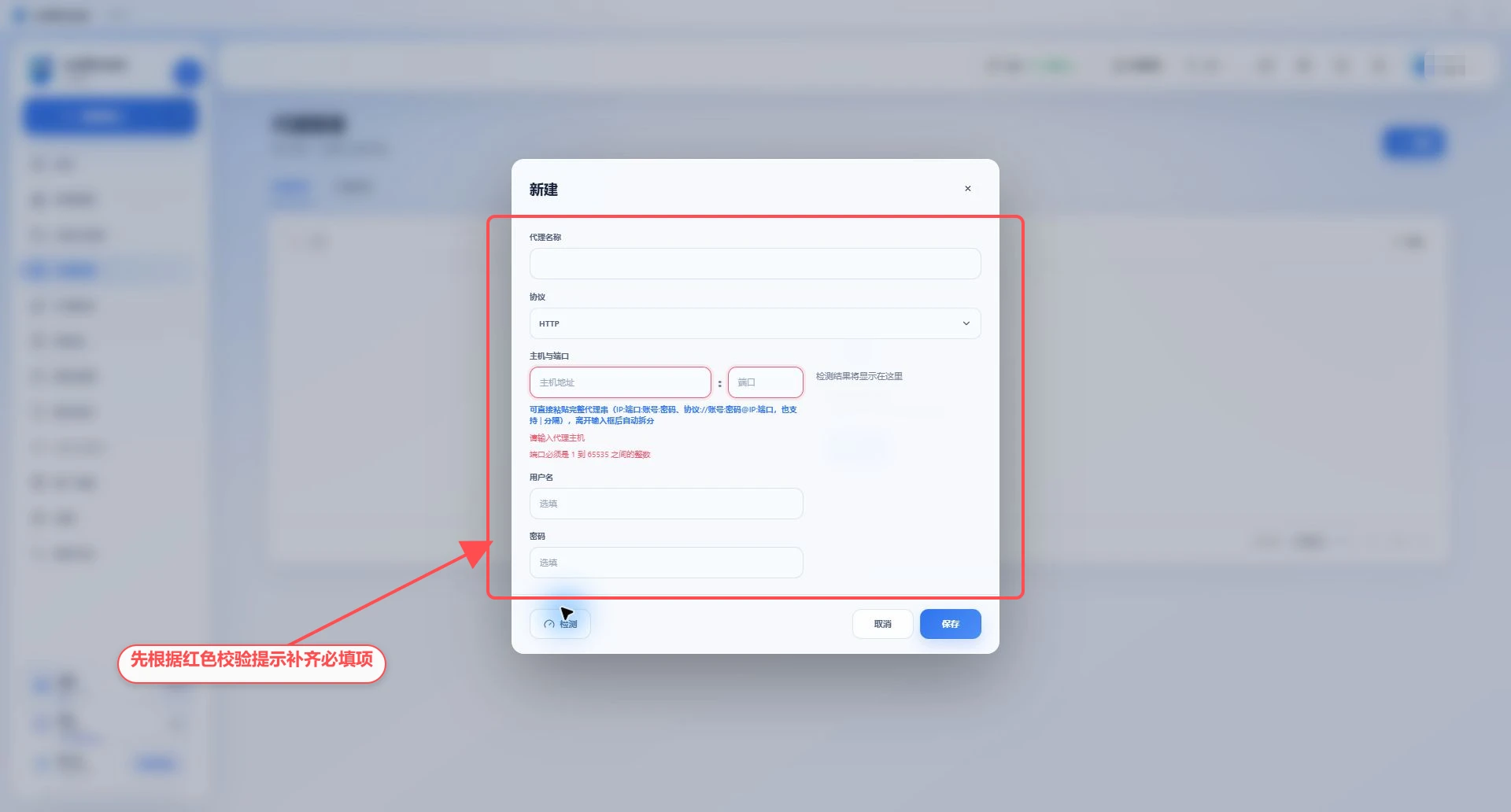
Go to "Proxy Management";
Edit target proxy;
Remove extra spaces in the host input box;
Confirm that the port is an integer from 1–65535;
Re-enter username and password;
Click "Test";
Record the complete error message.
The complete proxy URL can be automatically split, but it still needs to be checked field by field after splitting.
Step 3: Test local network and system proxies
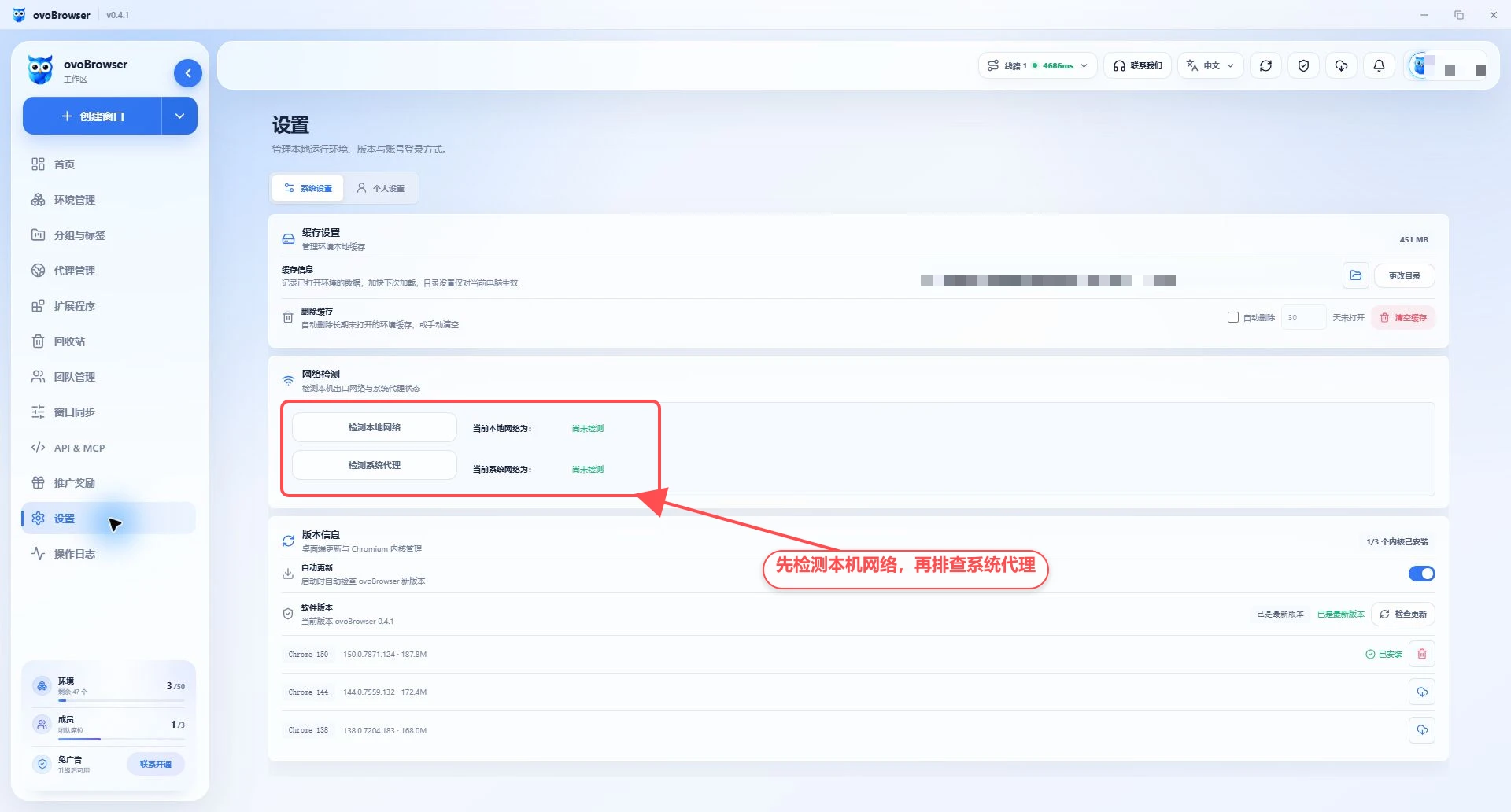
Go to "Settings > System Settings > Network Test".
Click "Test Local Network" to view the actual exit of the computer without going through the system proxy;
Click "Test System Proxy" to view the exit of the system proxy or local network tool;
Compare the two results;
If the system proxy test fails, check Windows proxy settings, PAC, VPN, Clash, V2Ray and other local tools;
After modifying the local network, return to the Proxy Management and recheck.
ovoBrowser will test the Windows system proxy, PAC, HTTP(S)/ALL_PROXY profile variables, and some common local proxy ports in real time. Proxy test may try two links: "forwarded through system proxy" and "direct connection to local machine", and automatically selects the successful method.
The picture below shows the real state before test is performed. After clicking the button, continue the investigation based on the actual results.
Step 4: Deal with the error according to its meaning
Connection timed out or unreachable
Possible reasons: host or port error, local network cannot access the proxy server, firewall blocking, proxy server offline.
Processing method:
Recheck host and port;
Try again after switching the local network;
Temporarily check firewall or security software rules;
Contact the proxy provider to confirm that the node is online.
Connection refused
The target host is reachable, but there is no proxy service for the port, or the service refuses the connection. Confirm port, protocol, and node status.
DNS parsing failed
When the proxy host is a domain name, this machine cannot resolve it. Try replacing DNS, check the spelling of the domain name, or obtain an available IP from the service provider.
407, authentication failure or upstream rejection
The username, password or authentication method is incorrect. If the proxy uses an IP whitelist, add the actual exit IP of the current computer or system proxy to the service provider's whitelist. The whitelist needs to be updated after the dynamic network egress changes.
403 or policy forbidden
The proxy provider denies access to the test target, region, or port. Contact the service provider to confirm target website limits, concurrency limits, and package permissions.
TLS handshake failed or returned non-HTTP content
It is common to select HTTP proxy as HTTPS, SOCKS5 as HTTP, or the proxy port requires a specific TLS mode. Re-select the agreement according to the service provider's instructions.
Detecting channel return exceptions
An IP query channel may be temporarily unavailable. The "IP query channel" can be switched in the profile editor; the client will also try other channels if the preferred channel fails.
Step 5: Determine whether the proxy itself or the local network is the problem
Cross-testing can be done:
The same proxy is tested on another computer or proxy testing tool;
The current computer is using another known available proxy test;
The current proxy is detected under different local networks;
Compare the results.
The proxy fails on all devices: more likely a problem with the proxy itself;
All proxies failed only on the current computer: it is more likely to be a problem with the local network or security software;
Only the link through the system proxy is successful: it means that the directly connected network cannot access the upstream proxy;
The test is successful but the target website fails: More likely, the proxy restricts the target website.
The test is successful but the page still shows that the test failed after the profile is started.
Confirm that the profile selected is the same proxy just detected;
Close the running profile;
Save proxy and profile configuration;
restart;
Check whether the launch progress panel stops at "Check Proxy", "Test Network" or "Start Kernel";
If the failure occurs in the kernel phase, the problem may not be proxy-related and the kernel download and browser fingerprints settings should be checked.
What to provide when contacting customer support
Provides proxy protocol, desensitized host, port, test time, complete error, whether to use system proxy, and local network and system proxy test results. Hide username, password and full proxy URL.